Samco
ICP Etching Systems
Samco’s Inductively Coupled Plasma (ICP) etching systems combine independent high-density plasma generation and directional ion acceleration to deliver fine-pattern micro-fabrication for compound semiconductors, silicon substrates, and advanced electronic devices. By decoupling plasma density from substrate bias, our ICP platforms achieve high etching rates, smooth sidewall morphology, and excellent profile control over high-aspect-ratio structures. Built to bridge the gap between Lab and Fab, Samco ICP etching systems enable predictable process scaling from initial device research to automated volume production.
-
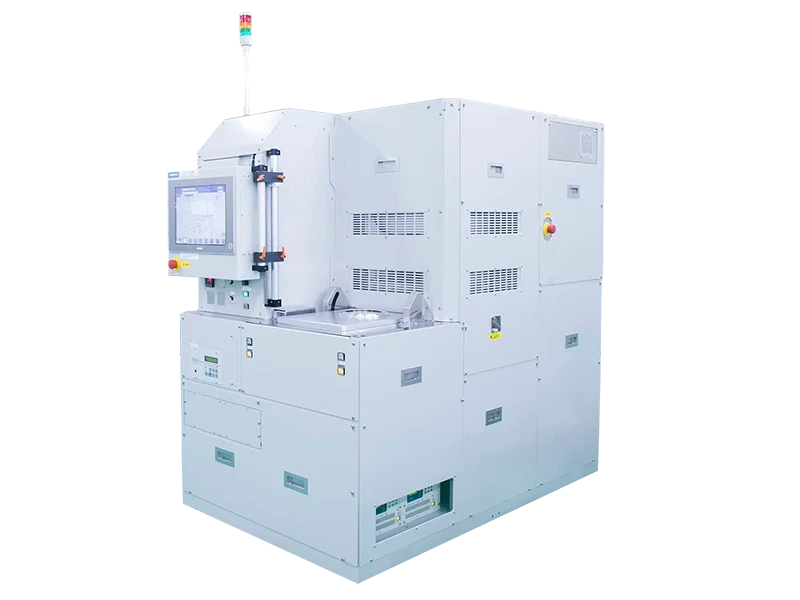
ICP Etching System RIE-400iP
Compact III-V Etching System
-
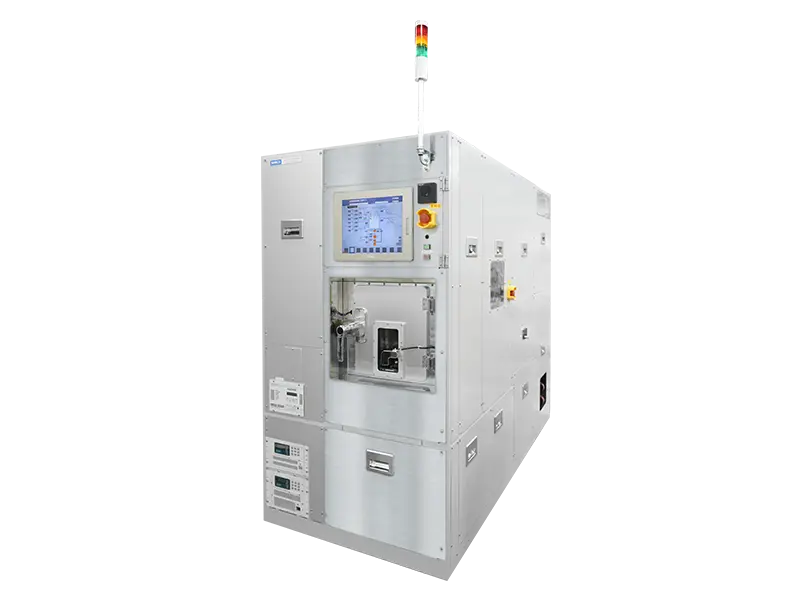
ICP Etching System RIE-400iPC
Cassette Loading System for 4"
-
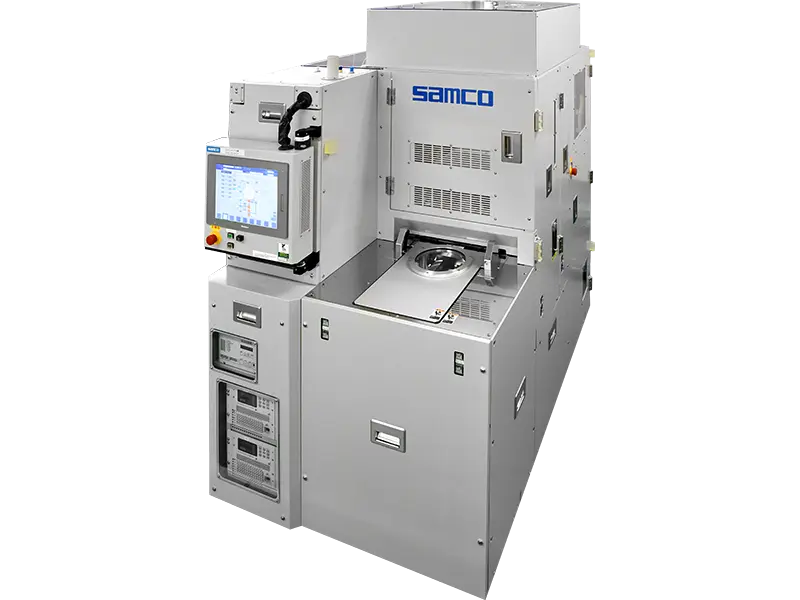
ICP Etching System RIE-800iP
Flagship Load Lock System
-
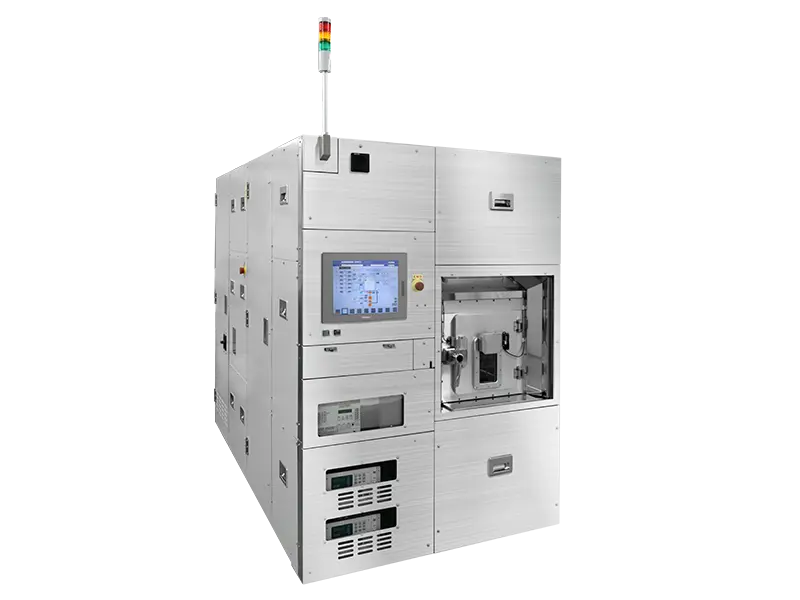
ICP Etching System RIE-800iPC
Flagship Cassette Loading System






Features of ICP Etching Systems
Samco ICP etching systems deliver robust pattern transfer across wide-bandgap and compound semiconductors, including GaN, SiC, GaAs, and InP, alongside dielectric layers, noble and electrode metals (Pt, Au, Ni), ferroelectrics and functional oxides (PZT, LiNbO3), and diamond substrates. Utilizing high-density plasma configurations with optimized halogen chemistries and precise temperature control, the systems maintain stable volatility and uniform directional etching without redeposition or chamber memory effects. These capabilities directly support key processing steps for Power, RF, SAW/BAW filters, MEMS, quantum devices, and optical components. Built on modular architectures, the lineup spans flexible open load tools for research laboratories to fully automated load lock and cassette loading platforms designed for high-throughput fabrication lines.
ICP Etching Systems FAQ
- How does Samco's Hyper Symmetrical Tornado Coil (HSTC) design enhance ICP etch profiles and surface quality?
- Samco's proprietary Hyper Symmetrical Tornado Coil (HSTC) generates a highly symmetric, high-density plasma across the entire chamber volume while decoupling plasma generation from substrate RF bias. This ultra-uniform plasma field eliminates localized electric field hot spots, delivering vertical sidewall anisotropy, superior within-wafer etch uniformity, and minimal surface lattice damage on sensitive compound semiconductors such as GaN, GaAs, and InP.
- What capabilities do Samco ICP tools offer for processing non-volatile, hard-to-etch materials such as noble metals, ferroelectrics, and diamond?
- To etch materials with low chemical volatility—including noble metals (Pt, Au, Cu), ferroelectric oxides (PZT, LiNbO3), and diamond—Samco ICP systems combine HSTC high-density plasma with elevated substrate stage temperatures and optimized halogen/inert gas chemistries. This thermal and physical optimization prevents redeposition on feature sidewalls and eliminates chamber memory effects during sequential production cycles.
- What capabilities and etch uniformities can be achieved on high-power and optoelectronic device structures?
- Depending on mask selection and material chemistry, Samco HSTC-ICP tools achieve high-aspect-ratio deep trench features in SiC, GaN, and dielectric layers with steep sidewall angles. Utilizing dynamic electrostatic chuck (ESC) temperature control alongside high-density HSTC plasma, exceptional within-wafer etch rate uniformity is maintained across standard substrate platforms.
- How does Samco ensure process stability and damage-free processing during deep trench etching?
- In addition to standard chlorine and fluorine chemistries, Samco ICP platforms integrate specialized gas switching routines and helium backside cooling to manage substrate thermal dissipation under high-density HSTC plasma. This maintains stable photoresist or hard mask integrity, preventing sidewall roughness, micro-trenching, and undercut profiles during extended etch cycles.
- How are ICP etching recipes transferred from R&D open load platforms to automated volume manufacturing tools?
- Samco standardizes core HSTC plasma source geometries, chamber dimensions, and RF matching network topologies across open load R&D platforms and automated load lock or cassette loading production systems. Because the core plasma distribution and reaction dynamics remain identical, etch rates, selectivity profiles, and sidewall angles developed in the laboratory transfer directly to commercial manufacturing lines with minimal recipe tuning.

