Samco
LSCVD Systems
Engineered for low-temperature deposition, Samco’s Liquid Source Chemical Vapor Deposition (LSCVD) system processes silicon dioxide (SiO2) and silicon nitride (SiN) films using liquid precursors like TEOS and SN-2. By vaporizing liquid precursors, the system deposits high-quality dielectric and passivation layers without high thermal processing—protecting heat-sensitive substrates (such as compound semiconductors, flexible polymers, and microelectronics) from thermal stress and degradation.Equipped with a specialized liquid delivery system, the LSCVD ensures uniform film thickness, exceptional step coverage, and reliable process repeatability. With its compact footprint, it delivers a versatile, dependable solution for advanced R&D and specialized production across "Lab and Fab."
-
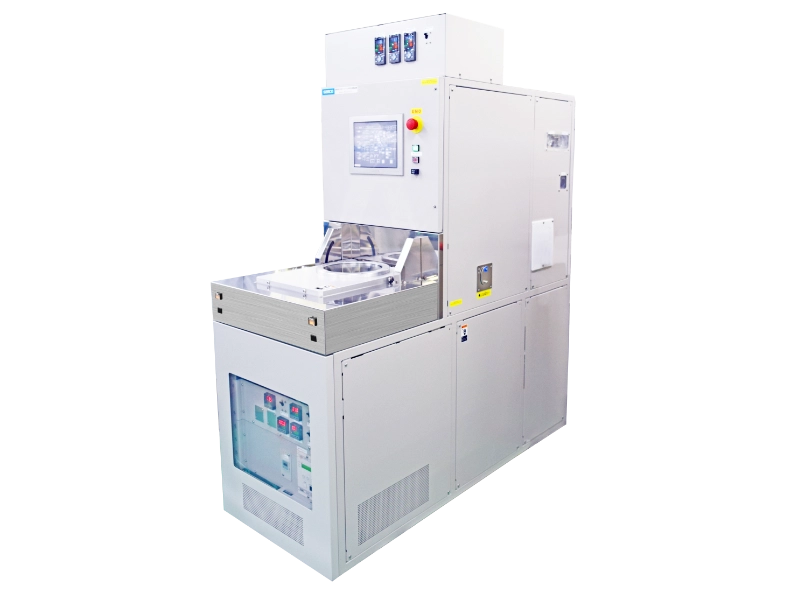
LSCVD System PD-200STL
Load Lock LSCVD
Features of LSCVD Systems
The LSCVD system is a high-throughput, low-temperature plasma-enhanced CVD system designed for mass production
LSCVD Systems FAQ
- What are the primary advantages of Samco's LSCVD system over conventional CVD systems?
- The LSCVD system utilizes a cathode-coupled self-bias deposition technique and liquid TEOS sources to achieve high deposition rates (>300 nm/min) at low temperatures (80–400C). This combination allows for low-stress SiO2 film formation from thin layers up to 100 µm thick without causing thermal damage to temperature-sensitive substrates
- Can the LSCVD system process heat-sensitive materials like polymers or plastics?
- Yes. Because the LSCVD system operates at low temperatures down to 80C, it can safely deposit high-quality protective and insulating dielectric layers directly onto plastic, polymer, and other heat-sensitive substrates without risking deformation or thermal stress.
- How well does the system handle high-aspect-ratio geometries like MEMS or TSVs?
- The system delivers exceptional step coverage on complex, 3D high-aspect-ratio structures. This makes it ideal for challenging applications such as conformal insulating film deposition on via sidewalls for 3D LSIs and coating intricate MEMS devices.
- Is it possible to tune optical properties like the refractive index with this system?
- Yes. By introducing additional liquid precursors such as Germanium (Ge), Phosphorus (P), or Boron (B), operators can precisely control and fine-tune the refractive index of the deposited film. This capability is particularly useful for fabricating optical waveguides (fiber cores and cladding).

