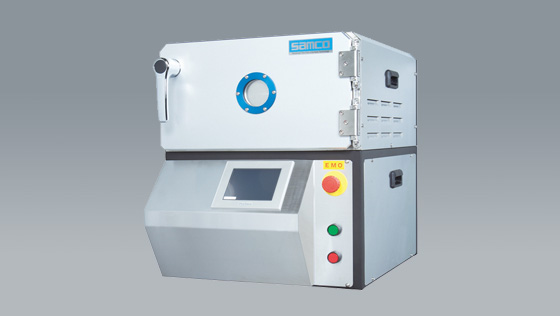
Plasma
What is Plasma?
Ice represents the solid state of water. Upon melting, it transitions into liquid water, and upon vaporization, it converts into gaseous water vapor. Beyond the three conventional phases of matter--solid, liquid, and gas--exists a fourth fundamental state known as plasma.
Matter is composed of atoms, which consist of a positively charged nucleus orbited by negatively charged electrons. Electrostatic attraction, governed by Coulomb's law, maintains atomic structural stability. When energy is imparted to an bound electron, its energy state increases--a process designated as excitation. If sufficient energy is transferred, the electron overcomes the electrostatic potential barrier and detaches from the nucleus, resulting in ionization. This process yields positively charged ions and unattached free electrons.
Plasma is an ionized gas comprising unbound electrons, ions, and neutral particles. It exists as a dynamic, non-equilibrium system in which continuous ionization and de-excitation processes occur simultaneously. Within the plasma environment, ions capture free electrons through recombination to reform neutral atoms. Concurrently, excited atoms return to their ground state by emitting electromagnetic radiation, thereby generating the characteristic luminous emission associated with plasma discharges.